
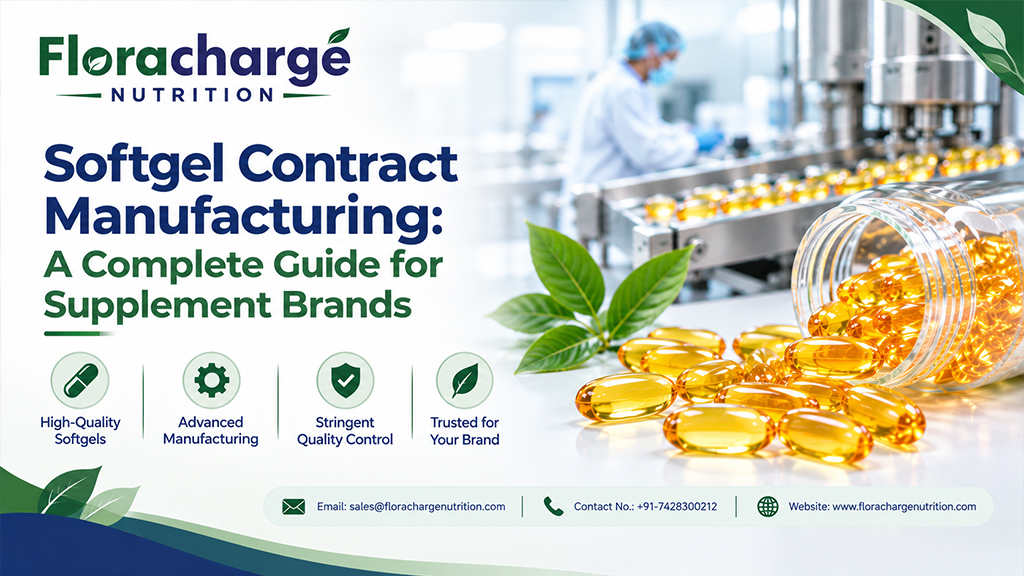
The global dietary supplement industry is experiencing unprecedented growth, driven by increasing consumer awareness of health, wellness, and preventive nutrition. Among the many supplement formats available today, softgel capsules have emerged as one of the most preferred dosage forms due to their superior bioavailability, ease of consumption, and appealing appearance.
For brands looking to enter or expand within the nutraceutical market, partnering with a reliable softgel contract manufacturing company can significantly reduce operational complexities while ensuring high-quality product development.
At Floracharge Nutrition, we understand the evolving demands of modern supplement brands. As a trusted nutraceutical manufacturing partner, we help businesses develop premium-quality softgel supplements that meet market expectations, regulatory standards, and customer preferences.
This comprehensive guide explores everything supplement brands need to know about softgel contract manufacturing, from formulation and production to quality assurance and private labeling opportunities.
What Is Softgel Contract Manufacturing?
Softgel contract manufacturing refers to the process where a specialized manufacturer develops, formulates, produces, packages, and sometimes distributes softgel supplements on behalf of another brand.
Instead of investing millions in manufacturing infrastructure, equipment, quality control systems, and regulatory compliance, supplement companies can leverage the expertise and facilities of a contract manufacturer.
The contract manufacturer typically handles:
- Research and development
- Ingredient sourcing
- Softgel formulation
- Encapsulation
- Quality testing
- Packaging
- Labeling
- Regulatory documentation
This allows supplement brands to focus on:
- Marketing
- Sales
- Branding
- Distribution
- Customer acquisition
Why Softgel Capsules Are Popular
Softgel capsules continue to dominate the supplement industry because of their numerous advantages.
1. Enhanced Bioavailability
Softgels are ideal for oil-based nutrients because they improve absorption rates within the body. Nutrients dissolved in oil are often more efficiently absorbed compared to traditional tablet formats.
Examples include:
- Omega-3 Fish Oil
- Vitamin D3
- Vitamin E
- CoQ10
- CBD Oil
- Herbal extracts
2. Easy to Swallow
Consumers often find softgels easier to swallow than hard tablets.
Benefits include:
- Smooth surface
- No unpleasant aftertaste
- Comfortable consumption
3. Product Stability
The sealed capsule protects ingredients from:
- Oxygen
- Moisture
- Contaminants
- Light exposure
This extends shelf life and maintains potency.
4. Premium Consumer Perception
Softgel products often look more professional and premium, increasing customer confidence and purchase intent.
How Softgel Contract Manufacturing Works
Understanding the manufacturing process helps supplement brands choose the right production partner.
Step 1: Product Concept Development
The journey begins with defining:
- Product purpose
- Target audience
- Active ingredients
- Dosage
- Market positioning
Questions to consider:
- Is the supplement focused on immunity?
- Weight management?
- Joint support?
- Women’s health?
- Sports nutrition?
A qualified manufacturer helps refine the product concept into a viable formulation.
Step 2: Formulation Development
Formulation is one of the most critical stages.
Experts determine:
- Ingredient compatibility
- Stability
- Dosage accuracy
- Regulatory compliance
Popular softgel formulations include:
Vitamins
- Vitamin D3
- Vitamin E
- Vitamin A
- Vitamin K2
Omega Oils
- Fish Oil
- Krill Oil
- Flaxseed Oil
Herbal Extracts
- Ashwagandha
- Turmeric Curcumin
- Garlic Oil
- Black Seed Oil
Specialty Ingredients
- CoQ10
- Lycopene
- Lutein
- Resveratrol
Step 3: Ingredient Sourcing
Reputable manufacturers source ingredients from certified suppliers.
Key considerations include:
- Purity
- Potency
- Traceability
- Certifications
- Sustainability
Raw materials are tested before production begins.
Step 4: Softgel Encapsulation
The encapsulation process involves filling liquid formulations into gelatin or vegetarian shells.
The shell consists of:
- Gelatin or plant-based alternatives
- Water
- Plasticizers
- Colorants (if required)
Modern encapsulation machinery enables precise dosing and consistency.
Step 5: Drying and Stabilization
Freshly manufactured softgels undergo controlled drying processes.
This stage ensures:
- Proper shape retention
- Stable moisture levels
- Improved shelf life
- Product consistency
Step 6: Quality Testing
Every batch should undergo rigorous testing.
Important tests include:
Microbial Testing
Verifies absence of harmful microorganisms.
Heavy Metal Testing
Ensures compliance with industry standards.
Stability Testing
Determines product shelf life.
Potency Verification
Confirms active ingredient concentration.
Disintegration Testing
Measures capsule breakdown performance.
Step 7: Packaging and Labeling
Manufacturers may offer:
- HDPE bottles
- Glass bottles
- Blister packs
- Stick packs
- Pouches
Private labeling options allow brands to launch products under their own name and packaging identity.
Benefits of Choosing a Softgel Contract Manufacturer
Reduced Capital Investment
Building a manufacturing facility requires:
- Equipment purchases
- Facility infrastructure
- Quality labs
- Regulatory approvals
Contract manufacturing eliminates these costs.
Faster Market Entry
Experienced manufacturers already have:
- Production systems
- Supply chains
- Regulatory frameworks
This dramatically reduces product launch timelines.
Access to Industry Expertise
Manufacturers bring valuable knowledge regarding:
- Ingredient trends
- Consumer demand
- Regulatory requirements
- Formulation science
Scalability
As demand increases, production can be scaled without major investments.
This flexibility supports business growth.
Regulatory Compliance
Reliable manufacturers follow:
- GMP Standards
- HACCP Systems
- ISO Certifications
Compliance reduces legal and quality risks.
Types of Softgel Supplements Brands Can Manufacture
Immune Support Softgels
Examples:
- Vitamin D3
- Zinc Oil Formulations
- Vitamin E
Heart Health Softgels
Examples:
- Omega-3 Fish Oil
- CoQ10
- Garlic Oil
Joint Support Softgels
Popular ingredients:
- Curcumin
- Boswellia
- Omega Oils
Beauty and Skin Health Softgels
Ingredients include:
- Biotin
- Vitamin E
- Collagen Oils
- Astaxanthin
Men’s Health Softgels
Examples:
- Saw Palmetto
- Lycopene
- CoQ10
Women’s Health Softgels
Formulations may contain:
- Evening Primrose Oil
- Iron Complexes
- Vitamin D3
Weight Management Softgels
Common ingredients:
- CLA
- Green Tea Extract
- L-Carnitine
What to Look for in a Softgel Contract Manufacturer
Selecting the right partner is critical.
Manufacturing Certifications
Look for facilities holding relevant certifications such as:
Research and Development Capability
Choose manufacturers with dedicated R&D teams capable of:
- Custom formulations
- Product innovation
- Stability optimization
Ingredient Transparency
Manufacturers should disclose:
- Ingredient origins
- Testing procedures
- Quality standards
Production Capacity
Ensure manufacturing capability aligns with future business growth.
Quality Control Systems
Strong quality systems demonstrate commitment to product excellence.
Ask about:
- In-house laboratories
- Third-party testing
- Batch traceability
Private Label Support
The best partners provide:
- Label design assistance
- Packaging procurement
- Brand development guidance
Private Label Softgel Manufacturing
Private labeling is one of the fastest ways to build a supplement brand.
A manufacturer develops products while your company markets them under your own brand name.
Benefits include:
- Reduced development costs
- Faster launch timelines
- Lower operational burden
- Professional manufacturing standards
Private label softgels remain highly popular among:
- Pharmacies
- Wellness companies
- Healthcare professionals
- E-commerce brands
- Fitness businesses
Market Trends Driving Softgel Demand
Several industry trends continue to increase demand for softgel products.
Personalized Nutrition
Consumers increasingly seek personalized wellness solutions.
Preventive Healthcare
People are focusing more on prevention than treatment.
Plant-Based Supplements
Demand for vegetarian softgels is rising globally.
Premium Nutraceuticals
Consumers prefer clinically supported formulations backed by quality manufacturing.
Sports and Active Lifestyle Products
Performance-focused supplements continue to gain popularity among fitness-conscious consumers.
Common Challenges in Softgel Manufacturing
Although softgels offers significant advantages, development requires technical expertise.
Challenges include:
- Ingredient compatibility issues
- Oxidation risks
- Shell stability
- Product leakage
- Moisture control
Experienced manufacturers implement robust quality systems to overcome these challenges.
Why Partner with Floracharge Nutrition?
At Floracharge Nutrition, we provide comprehensive softgel contract manufacturing solutions designed for modern supplement brands.
Our capabilities include:
Custom Formulation Development
Innovative formulations aligned with current market trends.
Premium Ingredient Sourcing
Quality ingredients from trusted global suppliers.
Advanced Manufacturing Standards
Produced under strict quality control and regulatory compliance.
Private Label Solutions
Launch products under your own brand with complete manufacturing support.
Scalable Production
From startup batches to large-scale commercial manufacturing.
Quality Assurance
Every batch undergoes extensive testing to ensure purity, potency, and consistency.
Whether you are launching your first supplement or expanding an established portfolio, Floracharge Nutrition offers reliable manufacturing expertise to support your business goals.
Conclusion
Softgel contract manufacturing offers an efficient, cost-effective, and scalable pathway for supplement brands seeking to enter the growing nutraceutical industry. By outsourcing manufacturing to a trusted partner, companies can focus on branding, sales, and customer engagement while ensuring their products meet the highest quality standards.
From formulation development and ingredient sourcing to encapsulation, testing, packaging, and private labeling, a reputable softgel contract manufacturer can simplify the entire product lifecycle.
As consumer demand for premium nutrition products continues to rise, softgel supplements remain one of the most attractive product formats available. Choosing the right manufacturing partner can make the difference between an average product launch and a highly successful supplement brand.
Floracharge Nutrition is committed to helping businesses bring innovative, high-quality softgel supplements to market with confidence, speed, and excellence.
Frequently Asked Questions (FAQs)
1. What is softgel contract manufacturing?
Softgel contract manufacturing is a service where a specialized company formulates, produces, packages, and labels softgel supplements for another brand.
2. Why are softgel capsules better than tablets?
Softgels offer easier swallowing, improved bioavailability, and better protection of ingredients from environmental factors.
3. Can I launch my own brand using private label softgels?
Yes. Private label manufacturing allows businesses to sell products under their own brand without operating a manufacturing facility.
4. What ingredients can be used in softgel capsules?
Common ingredients include vitamins, fish oils, herbal extracts, CoQ10, lutein, curcumin, and other oil-based nutrients.
5. How long does softgel product development take?
Depending on formulation complexity, development can take anywhere from a few weeks to several months.
6. What certifications should a softgel manufacturer have?
Look for GMP, ISO, HACCP, and relevant regulatory compliance certifications.
7. Are vegetarian softgels available?
Yes. Many manufacturers now offer plant-based and vegetarian softgel alternatives.
8. What is the minimum order quantity for softgel manufacturing?
MOQ varies depending on the manufacturer, formulation, and packaging requirements.
9. Can manufacturers help with packaging and labeling?
Yes. Most contract manufacturers provide complete packaging, labeling, and private branding solutions.
10. How do I choose the right softgel contract manufacturer?
Evaluate certifications, quality control systems, formulation expertise, ingredient sourcing standards, scalability, and private label capabilities before making a decision.